If your vision keeps changing and new glasses or contacts never seem to help, you might be dealing with more than just “bad vision.” Keratoconus is a progressive eye condition that affects the shape of your cornea, and when caught early, it can be managed before it affects your long-term sight.
Home » Eye Care Services » Keratoconus Solutions

We specialize in diagnosing and treating keratoconus using the latest technology and proven, non-invasive techniques. Our Fort Worth eye clinic offers advanced treatment options to help stabilize your cornea, preserve your vision, and prevent the need for more invasive procedures.
Whether you’ve just been diagnosed or are exploring your next step after years of contact lens challenges, we’re here to provide the clarity, guidance, and care you need to confidently move forward.
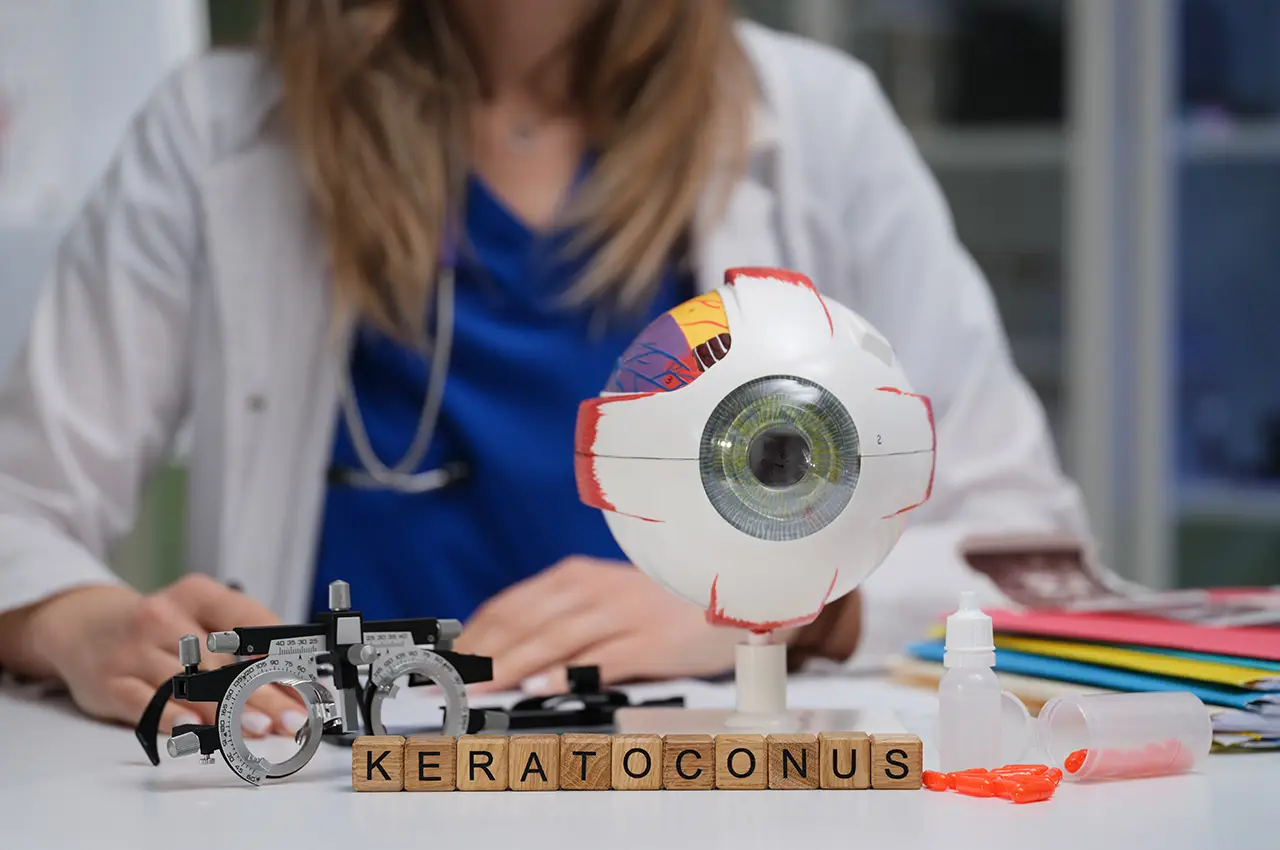
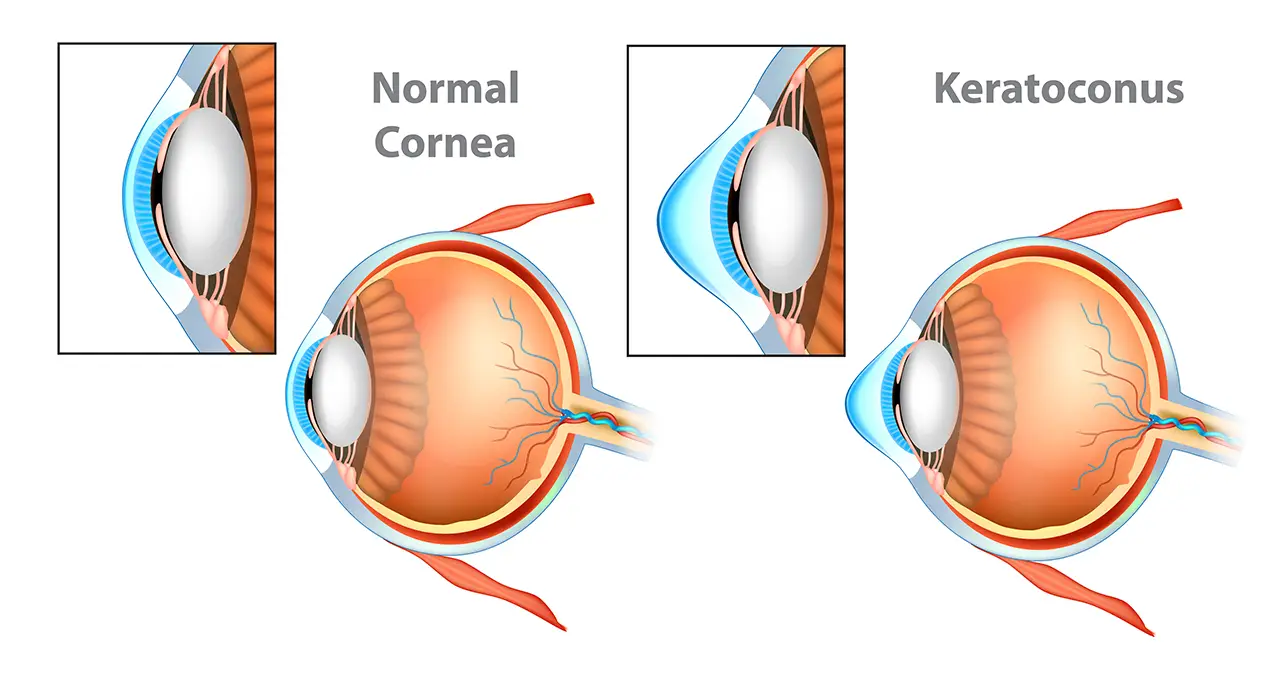
Keratoconus is an eye condition that affects the shape and strength of your cornea which is the clear, dome-shaped front surface of your eye. In a healthy eye, the cornea maintains a smooth, round curve that helps focus light onto the retina. But with keratoconus, the cornea gradually thins and bulges outward into a cone-like shape.
This distortion makes it harder for light to enter the eye, which can lead to blurry, distorted, or double vision. Over time, the condition can progress to the point where standard correction no longer works, and vision becomes increasingly difficult to manage without specialized care.
Keratoconus often starts with subtle changes that can be easily overlooked, especially if you’ve already been told you’re nearsighted or have astigmatism. But if your prescriptions keep changing without lasting improvement, it may be time to take a closer look.
Common symptoms of keratoconus include:
As the condition progresses, many patients also struggle with contact lens intolerance, where lenses that once worked well suddenly become uncomfortable or ineffective.
Accurate diagnosis is key when it comes to managing keratoconus, especially because it’s often mistaken for other vision problems. Chu Eye Institute uses advanced imaging and corneal mapping technology to measure your cornea’s shape, thickness, and surface.
Once we confirm a diagnosis, we’ll establish a baseline and track your condition regularly. Keratoconus can progress slowly or quickly depending on the individual.
At Chu Eye Institute, we offer advanced keratoconus treatments to stabilize the condition, improve vision, and reduce the need for more invasive procedures down the line. Every treatment plan is tailored to your eyes, your stage of progression, and your personal goals.
Cornea crosslinking is the gold standard for stopping keratoconus from getting worse. This non-surgical treatment uses vitamin B2 drops and a special UV light to strengthen the collagen fibers in your cornea, making it more stable and less likely to thin or bulge. It doesn’t reverse keratoconus, but it can stop it from progressing, especially when caught early.
Intacs® are small, curved ring segments that are inserted into the cornea to help flatten its shape and improve visual clarity. This procedure can be especially helpful for patients who are no longer seeing well with glasses or contacts, but aren’t ready for, or want to avoid, cornea transplant surgery.
PTK is a laser-based treatment used to smooth out surface irregularities and remove scar tissue caused by advanced keratoconus. While not a primary treatment, it can help improve comfort and vision in select cases, often as part of a broader care plan.

Want to learn more about your options for cornea transplant surgery? We offer advanced procedures to restore vision and improve comfort with expert, personalized care.
Looking to refer a patient for cornea crosslinking? We offer advanced keratoconus care with seamless management and timely updates to support your relationship with your patient.
If you’ve been diagnosed with keratoconus or suspect something more than a simple vision change, our team is here to help. Schedule a consultation and take the first step toward stabilizing your vision with expert, compassionate care.